2026 PGA Championship Course Preview: Aronimink Golf Club

2026 PGA Championship In-Depth Course Preview & Breakdown: Aronimink Golf Club, Newtown Square, PA (May 14–17, 2026)The 108th PGA Championship marks only the second time Aronimink Golf Club has hosted a men’s major (Gary Player won the 1962 PGA by one stroke over Bob Goalby at 278, –2). This Donald Ross masterpiece, restored to near original glory returns major golf to the Philadelphia area for the first time since 1962 and aligns with the region’s U.S. semiquincentennial celebrations. Practice rounds are May 11–13; the 156-player field tees off Thursday. The course rewards precision, elite iron play (especially 150–225+ yards), creative short-game scrambling, and superb green reading over raw power.
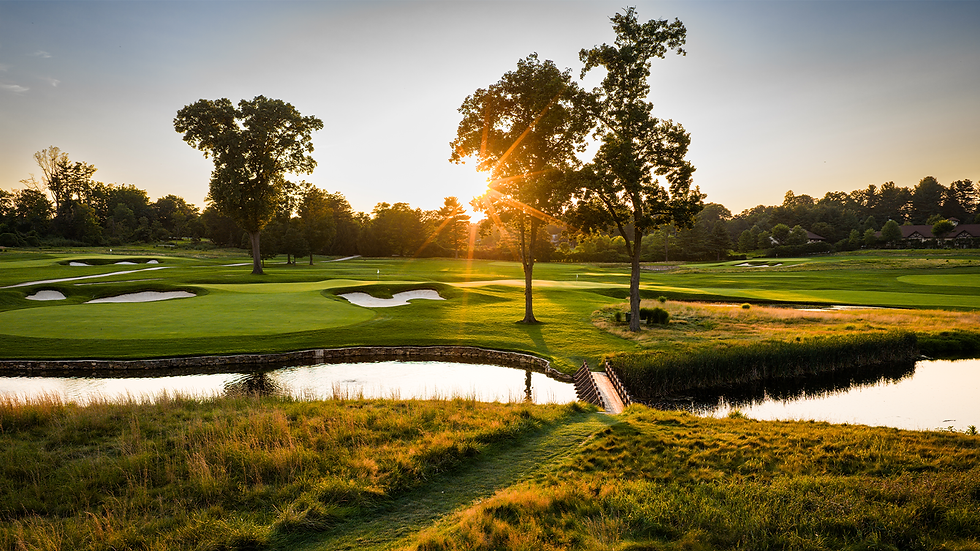
Comprehensive Course Overview & Setup :
Aronimink (founded 1896) sits on 320 acres of rolling Philadelphia Main Line farmland. Donald Ross (with associate J.B. McGovern) designed the current layout in 1928 and later called it his masterpiece: “I intended to make this course my masterpiece, but not until today did I realize I built better than I knew” (1948 visit). Ross emphasized strategic bunkering, elevation changes (less than 50 ft total but cleverly used), and severely contoured greens that demand leaving the ball below the hole. The routing uses a central rise for varied shot directions across a parkland setting.
2017 Gil Hanse/Jim Wagner Restoration (key for 2026 setup): Local architects (Hanse lives nearby) returned the course to Ross’s intent using original drawings, 8mm films, and aerial photos. They removed decades of intrusive trees (opening sight lines and play), expanded greens/fairways to original sizes (greens up to +30 ft in places), and dramatically increased bunkers (more than nearly any other U.S. major host). Large traps were split into smaller, layered clusters that create visual deception, awkward stances, and depth-perception challenges. Fairways were widened in spots for strategy; length was added. The result: a bolder, more penal Ross design with classic “strings and clusters” bunkering.
2026 PGA Championship Setup Specs (par 70, 7,394 yards—+114 yards vs. 2018 BMW Championship):
Fairways: Bentgrass (L-93), mowed ~0.375". Average width ~30 yards (narrowed strategically by PGA for variety). Firm and fast expected.
Rough: Tall fescue/poa annua mix, 3.25" height, ~90 acres total, penal but not U.S. Open-thick; misses will be costly.
Greens: A-1/A-4 Bentgrass, mowed ~0.100" (fast expect 12–13+ on Stimpmeter). Average size 8,200 sq. ft. Highly contoured (crowned turtlebacks, back-to-front slopes, subtle internal breaks, tiers, and shoulders). “Don’t leave it above the hole” is the mantra. Firm conditions will reward precise spin control.
Bunkers: 180 total (200,000 sq. ft. of sand); many 30"+ deep in clusters. Strategic, not just penal and often staggered or layered to force decisions and back players up into a corner.
Overall Character: Not a bomber’s track (though long enough). Premium on tee shot accuracy/positioning, long iron approaches (many 150–225+ yards), scrambling (deep bunkers + collection areas), and lag putting. Data Golf course-fit modeling ranks Aronimink high for approach play, driving accuracy, and around the green skill; pure distance is less predictive than on modern tracks. Historical winners (Player, Rose, Bradley) were complete players strong in irons and short game. Expect winning scores in the single digits under par (firmer than soft 2018 BMW –20).PGA Chief Championship Officer Kerry Haigh: “It’s a wonderful course… The greens will be the challenge.” Head Pro Jeff Kiddie (17+ years) echoes that well-rounded iron players and scramblers thrive.
Hole By Hole In Depth Breakdown:
Hole 1 – Par 4, 434 yards
Downhill tee shot from just below the clubhouse into a rising fairway, followed by a sharp uphill approach (often 200–250 yards) to a green that angles back-to-left with significant back-to-front slope. Four bunkers pinch the right fairway landing; two front bunkers (one each side) snag misjudged elevation changes. Deeper strategy & challenge: Nerves test early—awkward first-yardage calculations and slope reading are critical. Conservative play risks bogey; precise tee shot sets up a birdie look if you hit the right section below the hole. Under firm conditions, spin control is everything. What to watch: Opening-round jitters leading to early mistakes; this deceptively demanding starter sets the tone.
Hole 2 – Par 4, 413 yards
Dogleg-left with a semi-blind landing area that slopes left to right and a six bunker cluster at the bend. Large, well sloped green guarded by front-left/right bunkers plus a back collection area.
Deeper strategy & challenge: Positioning off the tee matters more than distance, bail right and face a tougher angle. Ross contours demand leaving the ball below the hole. What to watch: Players over cautious off the tee facing awkward approaches into heavy contour.
Hole 3 – Par 4, 455 yards
A dozen staggered bunkers on both sides force a teeshot decision: aggressive line for optimal angle or safe right for a longer but easier second. Wide but relatively shallow green protected front by final bunkers. Deeper strategy & challenge: Pure strategic driving hole, smart players weigh risk/reward. Shallow green rewards middle approaches; misses spin off. What to watch: Conservative plays turning birdie chances into bogeys.
Hole 4 – Par 4, 457 yards
Uphill drive with staggered bunkers on both sides of the landing zone. Longer hitters can carry them for a short iron into a two-tiered green. Deeper strategy & challenge: Classic risk reward where bombers gain advantage, but poor execution leaves scrambling. Tiers demand exact distance control. What to watch: Aggression from big drivers vs. precision from iron players.
Hole 5 – Par 3, 171 yards
Classic short Ross par 3: bunkers form a semicircle around the front half of a heavily contoured, challenging green complex. Deeper strategy & challenge: Precision and distance control trump power, visually intimidating sand wrap demands commitment. What to watch: Distance control to tucked pins; one of the purest one-shot tests.
Hole 6 – Par 4, 402 yards
Short uphill dogleg right with nearly a dozen bunkers guarding the right side from the bend all the way to the green. Safe layup left of three left bunkers leaves a short approach to a tricky, moving green. Deeper strategy & challenge: Course management over heroics, smart players avoid the right bunker gauntlet. Green movement rejects anything offline. What to watch: Smart plays vs. unnecessary risks; rewards patience.
Hole 7 – Par 4, 431 yards
Short dogleg right with blind fairway element. Emphasis on approach to a severely sloped green protected by deep bunkers left and front right. Deeper strategy & challenge: Birdie opportunity if you hit the right section; wrong side turns birdie into bogey. Blind tee adds mental test. What to watch: Aggressive approaches getting rejected by severe slopes.
Hole 8 – Par 3, 242 yards
Brutal long downhill par 3. Club selection varies daily by pin/tee (hybrids/long irons possible). Green nearly connects to the 10th with just a small fairway strip.Deeper strategy & challenge: Premium on exact yardage and trajectory; one of the longest par 3s.
What to watch: Hybrids and long irons into a par 3; played as the hardest hole in recent visits.
Hole 9 – Par 5, 605 yards
Longest hole: straight, uphill with side to side bunker clusters in both landing zones. Least severe green (Ross originally envisioned as a long two shotter).Deeper strategy & challenge: Three shot hole for most and the bunkers punish layups; longest hitters may reach but uphill slope complicates. What to watch: Whether players attack in two or grind as a par 5.
Back NineHole 10 – Par 4, 472 yards
Long downhill; ideal tee flirts with two right fairway bunkers to feed center. Pond guards front left of one of the most severe greens with heavy slopes surrounded by thick rough, water, and collection areas. Deeper strategy & challenge: Shortgame disasters lurk; precise drive sets up birdie chance, but green complex is a beast. What to watch: Recovery shots from water/rough; momentum changer.
Hole 11 – Par 4, 425 yards
More than 20 bunkers (evenly split fairway/green). Short uphill approach demands precise distance/spin short or spinny shots roll back up to 50 yards. Perched, challenging green.
Deeper strategy & challenge: One of Aronimink’s nastiest greens; depth perception and control critical. What to watch: Balls refusing to stay put; tests even the best iron players.
Hole 12 – Par 4, 466 yards
Elevation changes everywhere: downhill tee into dozen-bunker-squeezed fairway; uphill mid-iron to elevated two-tiered green (back to front slope, deep right bunker).Deeper strategy & challenge: Potential cardwrecker of a hole that requires a committed approach; tiers amplify mistakes. What to watch: Momentum swings and big numbers.
Hole 13 – Par 4, 385 yards
Shortest par 4: tight fairway with bunkers; bunkers narrow front of well contoured green (favor wider rear). New forward tee creates reachable risk-reward (OB left).Deeper strategy & challenge: Entertaining risk/reward & aggressive plays bring reward/disaster.
What to watch: Fireworks when reachable; one of the most fun holes all week.
Hole 14 – Par 3, 216 yards
Sand surrounds most of this left to right angled green. Center offers birdie look; misses yield awkward recoveries. Deeper strategy & challenge: Sensible golf often smartest, lag putt hunting risks bogey. What to watch: Conservative center plays vs. bold pins.
Hole 15 – Par 4, 546 yards
New tee makes it the longest par 4. Right-side drive uses right to left fairway slope; large green with open front (run up possible).Deeper strategy & challenge: Monster length demands power and angles; smart contour use gains yards. What to watch: Mid/long irons into a par 4.
Hole 16 – Par 5, 555 yards
Reachable in two for many, but must flight high to hold wide/shallow green (deep bunkers each side).Deeper strategy & challenge: Scoring chances with get able birdies (and eagles) plentiful for high-ball hitters. What to watch: Eagle attempts; excitement guaranteed.
Hole 17 – Par 3, 229 yards
Long, slightly downhill drama hole: pond runs entire left side of large green. Middle is safe but leaves tough lag; front-right pin beyond bunker creates chaos. Deeper strategy & challenge: Championship defining left is dead; safe play still tests putting.
What to watch: Late-Sunday swings; pure theater.
Hole 18 – Par 4, 490 yards
Strong finisher: trees pinch drive + right bunkers; uphill approach to large, terraced green. Corner pins favored for drama. Deeper strategy & challenge: Demanding drive sets up testy uphill second tiered green offers chaos on Sunday. What to watch: Final hole leaderboard drama and Wanamaker moments.
Weather Forecast (Thursday–Sunday, May 14–17
Highs low/mid 70s°F, lows ~53°F, winds 8–15 mph. Early forecasts (as of May 10) show rain risk early-week (potentially softening greens/fairways for easier scoring) but improving over the weekend.
Thursday (Round 1): High ~62°F, 55% chance rain/showers, winds ~10 mph E. Possible soft start.
Friday (Round 2): High ~66°F, ~56% chance rain, winds ~13 mph NE. Lingering moisture?
Saturday (Round 3): High ~71°F, mostly sunny, lighter winds ~8 mph NNW. Firmer, faster.
Sunday (Final Round): High ~74°F, sunny, calm. Ideal scoring conditions.
Rain early could mimic 2018 BMW softness; dry/firm favors precision and scrambling. Winds primarily affect exposed back-nine holes.


Comments